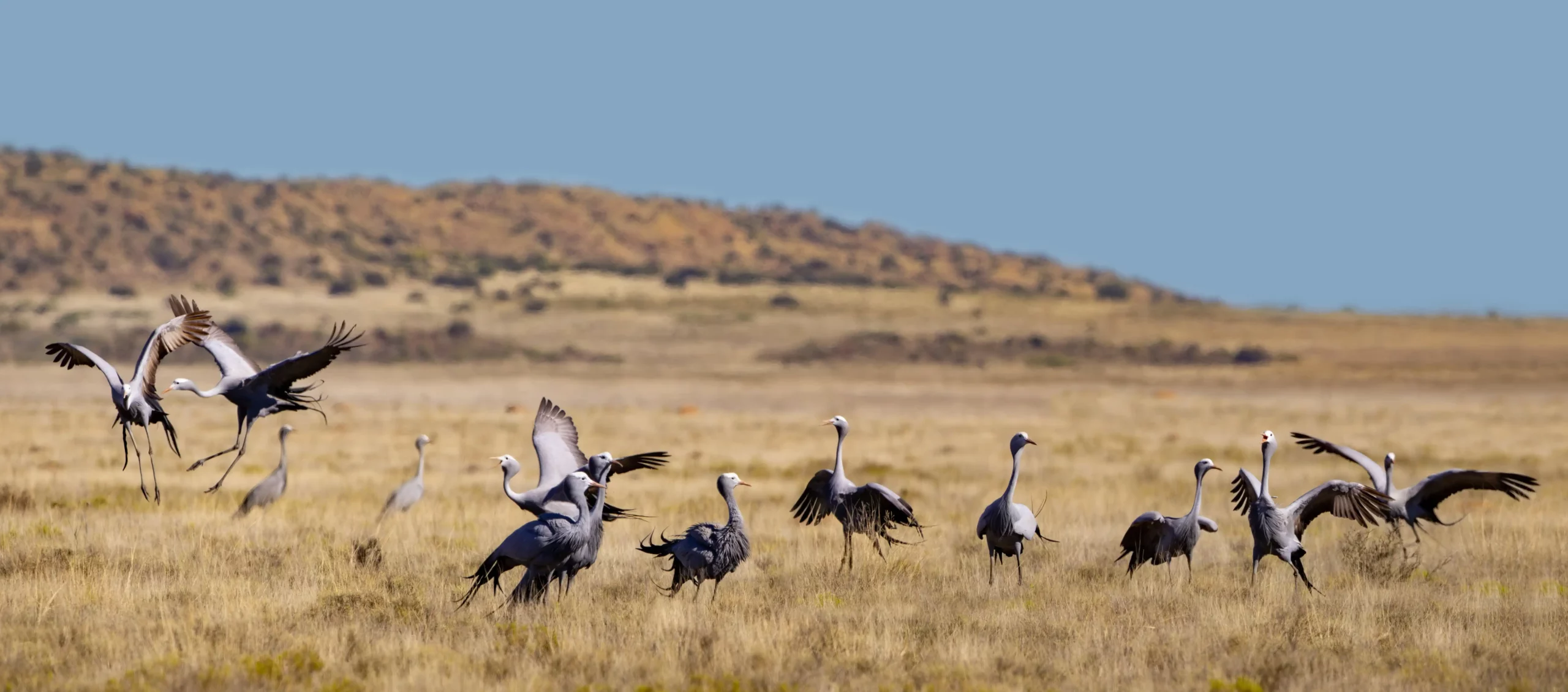




The Blue Crane: A Beacon of Hope for a Vulnerable Species

Kishindo Conservation Reserve plays a key role in protecting the Blue Crane population. Its focus on habitat preservation and sustainable practices offers a safe haven for these birds. By safeguarding natural habitats and applying conservation measures, Kishindo helps ensure the Blue Crane’s survival.
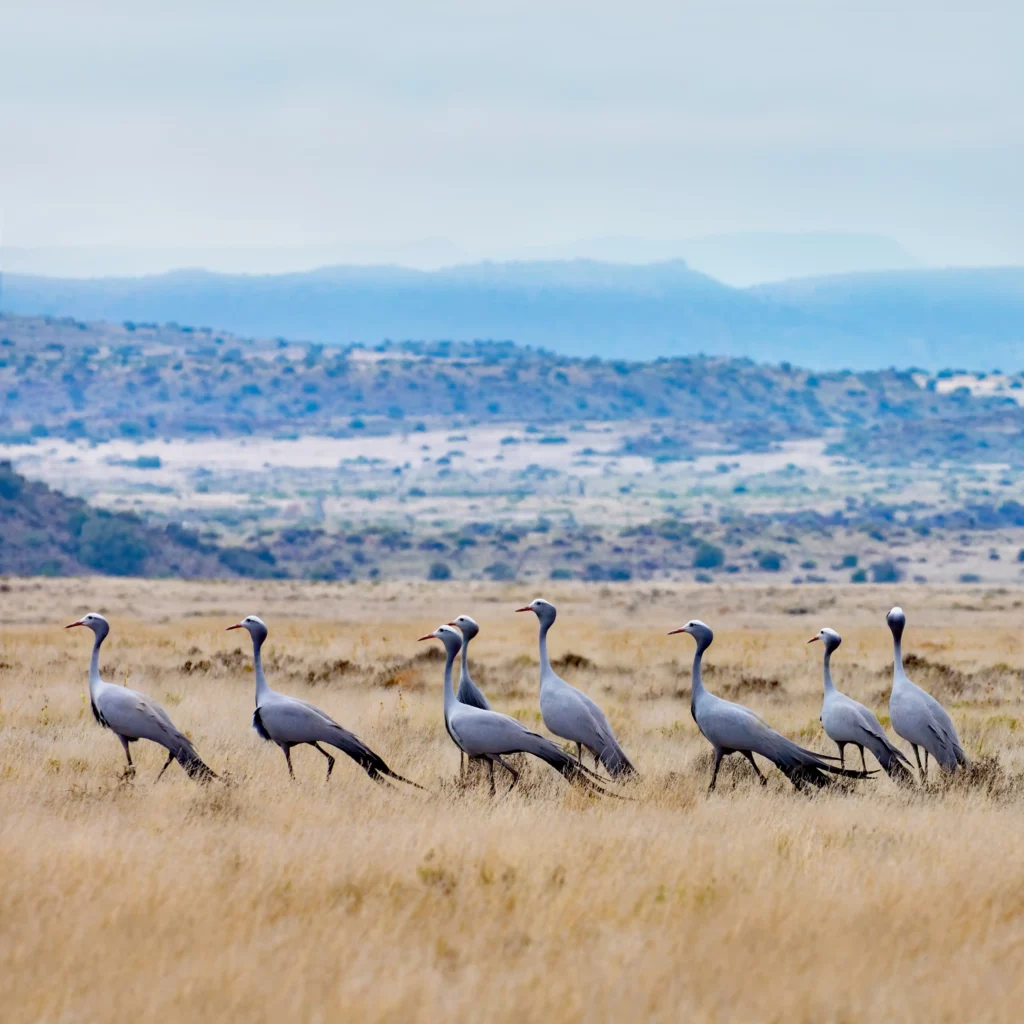
South Africa’s national bird, the Blue Crane, is one of the most iconic sights of the Free State grasslands — elegant, watchful, and quietly wild. Yet this species is Vulnerable and has recently been highlighted as declining in parts of its range, making safe habitat and responsible land management more important than ever.
At Kishindo Conservation Reserve, we value the Blue Crane as a marker of healthy grassland and wetland systems. By maintaining a protected landscape with low disturbance and conserved habitat, the reserve can offer a refuge where cranes may feed, rest, and breed.
A Glimpse into the Blue Crane's World
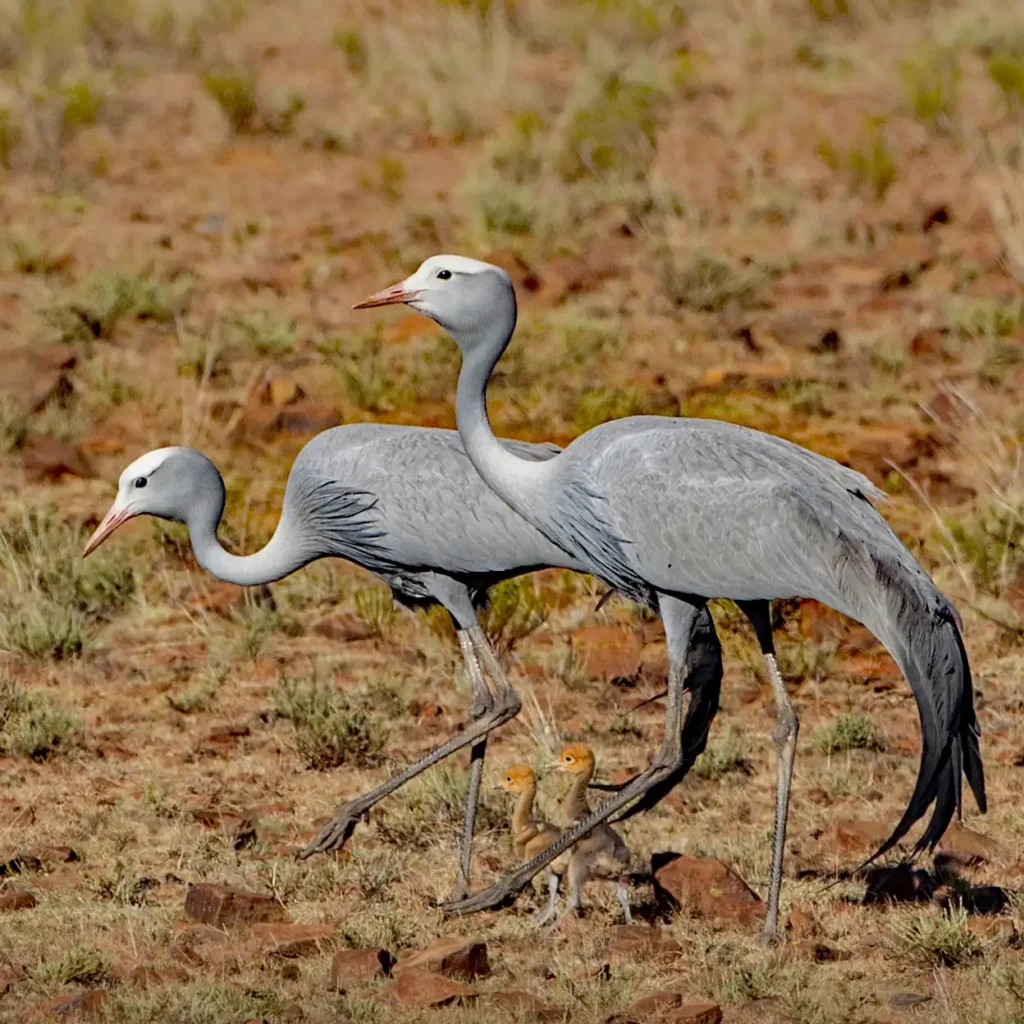
The Blue Crane is South Africa’s national bird and the most range-restricted crane species in the world, with the vast majority of the global population occurring in South Africa. Tall and striking (up to about 1.2–1.3 metres), it’s recognised by soft blue-grey plumage, a pale crown, and long, trailing wing feathers that can almost brush the ground.
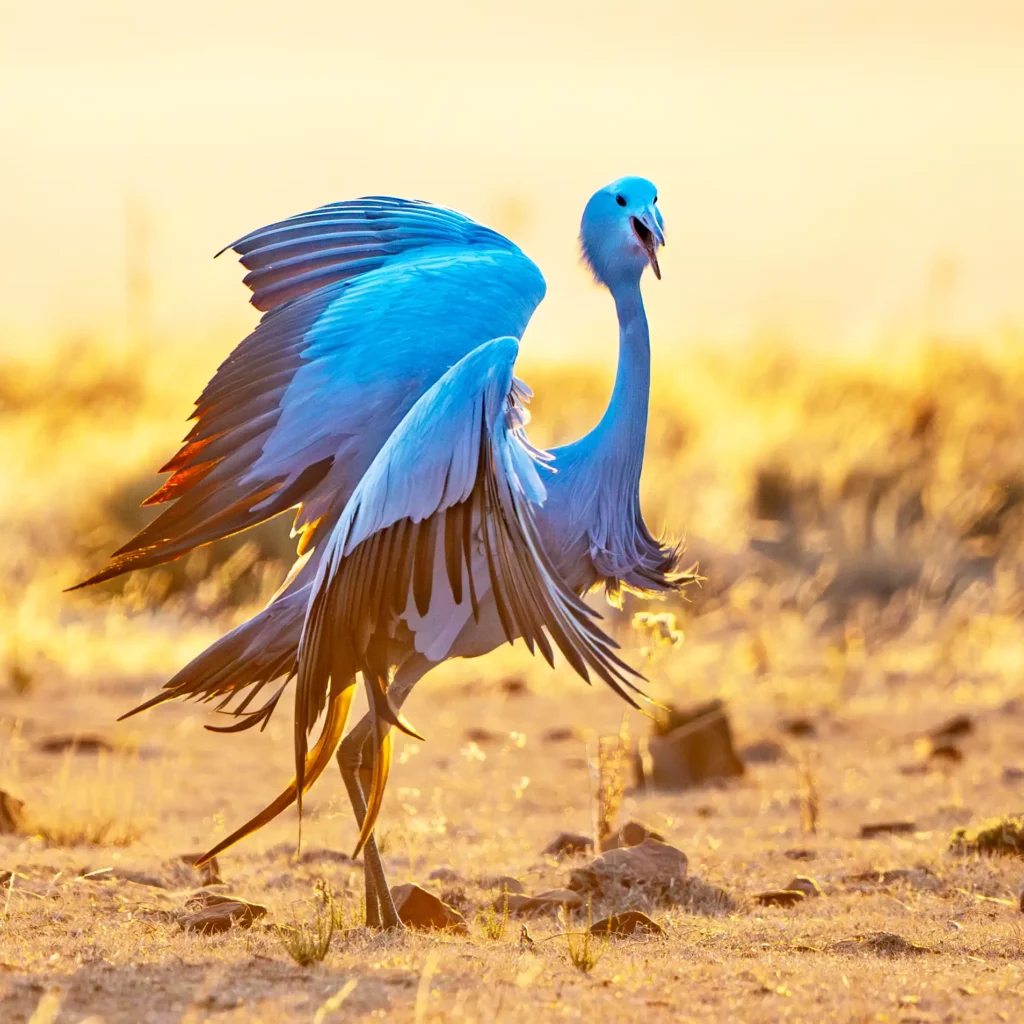
Beyond their beauty, Blue Cranes are known for their courtship “dances” — leaping, bowing, wing-spreading, and tossing tufts of grass in displays that feel part ritual, part celebration. They are typically monogamous during a breeding cycle and often nest on open ground.
Breeding season
Blue Cranes are generally summer breeders, with eggs most often recorded from about September/October through March, and both parents incubate the eggs (often around 30 days). Because nests are on the ground, breeding success depends heavily on calm conditions, good visibility, and minimal disturbance.
Habitat and Conservation Challenges
Blue Cranes are closely tied to South Africa’s grasslands and open agricultural landscapes — especially in provinces such as the Free State, Eastern Cape, and KwaZulu-Natal.
Despite their adaptability, they face serious human-linked threats, including:
- Poisoning (sometimes accidental, sometimes intentional)
- Collisions with powerlines and fences
- Habitat loss and fragmentation as land use intensifies
- Illegal capture and trade in some contexts
These pressures help explain why the species is now recognised as Vulnerable (globally and in recent regional assessment discussions).
Blue Cranes at Kishindo
Kishindo lies in prime Blue Crane country, and they are one of our most reliable sightings on game drive. On most drives, guests will see Blue Cranes across the open grasslands — feeding quietly, walking with deliberate grace, and calling across the veld in that unmistakable, far-carrying voice.
In the evenings, Blue Cranes often roost at one of our dams, gathering as the light fades and the reserve settles into stillness. At the right times of year, the grasslands can hold impressive flocks — sometimes 70 or more birds — a powerful reminder that this landscape still supports the kind of space and calm cranes need.
Importantly, cranes are sensitive and their welfare comes first. At Kishindo, sightings are approached in a calm, low-impact way — with respectful distances, minimal noise, and no pressure on the birds to remain near vehicles.
Cultural Significance
As South Africa’s national bird, the Blue Crane carries cultural meaning as well as ecological importance. It is widely regarded as a symbol of beauty, dignity, and resilience — a living emblem of the grasslands themselves.
Across multiple South African cultures, the Blue Crane is also associated with honour, leadership, and courage. In isiXhosa, the bird is known as indwe (“flag”), and Blue Crane feathers were historically awarded by chiefs to recognise individuals who had distinguished themselves — a visible sign of esteem and responsibility within the community.
In Zulu tradition, Blue Crane feathers were likewise regarded as highly prestigious and have been associated with royal and ceremonial regalia.
This symbolism has echoed into modern South African history as well. The name Isitwalandwe/Seaparankoe — one of the most recognised honours in South Africa’s political heritage — is commonly explained as meaning “the one who wears the plumes of the rare bird,” specifically linked to the Blue Crane, drawing directly on older traditions of crane-feather honours.
Seen through this lens, encountering Blue Cranes at Kishindo is about more than birding. It’s a chance to witness a species that carries both ecological value and a deep cultural resonance — a reminder that conserving grasslands protects not only biodiversity but living heritage too.
A Beacon of Hope
The Blue Crane reminds us that conservation is often quiet and practical: protecting habitat, reducing avoidable mortalities, and choosing land-use practices that allow wildlife to persist alongside people. With the species listed as Vulnerable and facing ongoing threats, every protected grassland refuge matters.
To learn more about Blue Crane conservation status and ongoing work in South Africa, visit BirdLife South Africa.